
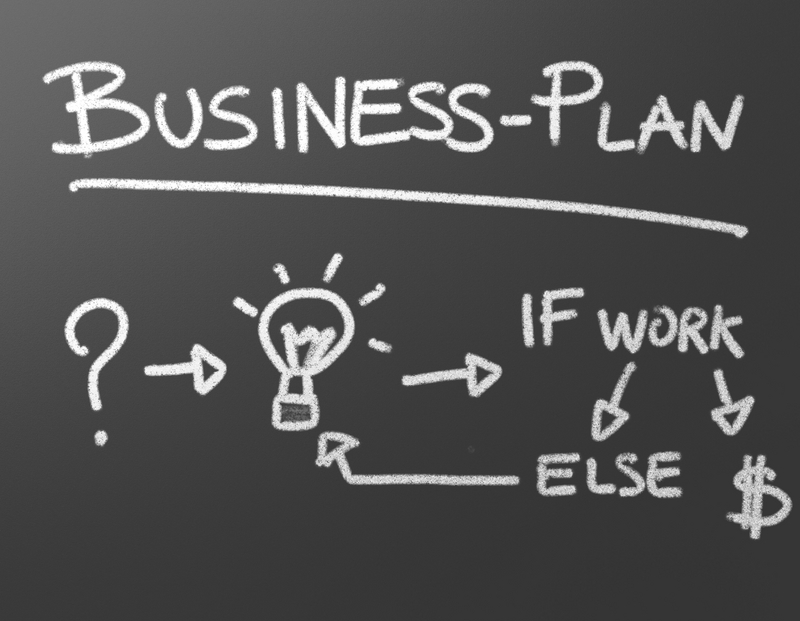

Your executive summary can make or break your business plan

While only 2 pages in length, the executive summary is by far the most  important component of your business plan or proposal. It is designed to  summarize the key elements, capture attention and most importantly, showcase the  financial highlights.

So, if you only have 2 pages to convey a significant amount of information  and summarize the financial upside, how do you decide what to put in and what to  leave out? Which financial features are critical to emphasize?

Depending on the purpose of your document and the intended audience  (investment, sale, partnership, strategic alliance, joint venture etc.), you  will want to tailor your financial disclosure to suit their needs and  expectations. What would they want/need to see in order to make an informed  decision?

At a minimum, you need to clearly state what financial input is required from  them and what they will get in return – i.e. a share, debt instrument, license,  exclusive right etc. Next, highlight the expected net profit and cash flow over  2-3 years. Also, give a clear indication of return on investment (ROI) AND a  realistic, well defined exit strategy.

In an executive summary, it is important to be succinct and focused. It is  not the time to tell your life story, overpromise with unrealistic projections  or overwhelm with too much detail. You will only get one chance to make a good  first impression and capture the attention of the reader. In fact, many  sophisticated investors have told me they rarely read a business plan or  proposal in its entirety. They make their decision on the strength of the  executive summary and their assessment of the owner/manager (in terms of  character, knowledge, skills and tenacity).

Focus on “what’s in it for them”. Show them clearly how they can benefit and  when the result will be crystallized. Give them enough detail to understand the  industry, opportunity and unique solution you provide. And most importantly,  clearly summarize the key financial metrics of profitability, cash flow and  ROI.

In short, make it EASY for them to invest in YOU.

Article Source: http://EzineArticles.com/6107414

Can you apply Warren Buffet’s best advice to your small business?

Discipline and attention to details is more important than ever if you want to succeed in challenging economic times. Take a look around… competitors are closing their doors – which means more potential customers for the businesses that DO survive. And in times like these, it’s going to take more than “thinking outside the box” and goodwill with existing customers to secure the survival of your business.

You may have been lucky over the past few years – you may have found it possible to operate without a detailed, written plan and systems/processes. But the global economic crisis has changed all of that. If you want to thrive, there is only one thing that is for sure – uncertain times call for deliberate decisions and proven practices. So here are my top tactics to recession-proof your business.

1. Begin with the end in mind

If you don’t know exactly where you are going, how will you know when you get there? Now is the second best time to decide on your strategy, set your goals and document tactics and timelines. Keep it simple – write a 2-3 page summary of what you intend to accomplish in 3 months, 6 months and 12 months.

2. Focus on cash flow not profit

You cannot buy a house or a new car with “profit” from your business. Make it your mission this year to develop and maintain a weekly/monthly cash flow forecast for your business. This is not hard to do but it does require discipline and a simple excel spreadsheet. If you need help, I recommend that you consider signing up for Imagineering Profit. With just a few numbers from your Balance Sheet and Profit and Loss statement, Imagineering Profit can calculate your cashflow for you and give you the insight that you need to get your company operating in the black!

3. Collect your debt NOW!

How many days does it take to collect your debts on average? Whatever it is, make it your goals to reduce this by at least 10 days. You may be surprised to know that if your annual revenue is around $500,000, you could save yourself up to $2,500 in interest carrying charges simply by collecting your debts 10 days quicker on average. Pay attention to customers who are taking longer than usual to pay. Now is not the time to be extending too much credit if you are concerned about their ability to pay.

4. Rank your customers

Do you know who your best and worse customers are? Have you ever tried to calculate how much profit you are making from each customer or group of customers? If you don’t know the answers to these questions, today is the best time to start tracking and measuring this.

5. Fire your worst customers

Everyone knows that is cheaper and easier to garner incremental business from existing customers. Some even argue that it is 6 times cheaper and 75% easier to convert a sale from someone who already knows and trusts you. If you have unprofitable customers, get rid of them and focus your attention on your best customers.

6. Trim your product range

Contrary to popular belief, it is better to have money in your back pocket than tied up in stock sitting on your shelves for months on end. The longer it sits and does not turn over, the more it actually costs you in lost opportunities. Spend 2 hours today calculating which of your SKUs or stock lines are your worst performers; make it a priority to sell those quickly to release some much needed cash. Consider reducing your overall investment in stock. Compile a spreadsheet of all the SKUs you carry and then run two separate columns – one for how many units you sell on average of each per month and the other being the total units on hand. If your stock gets delivered quickly, you should never be carrying more than one month’s worth of sales at any given time.

7. Monitor your breakeven and key numbers

The most important day of the month is the day that you break even and start making a profit. If you don’t know which day of the month that is, you need to find out today. Knowing this number allows you to monitor your performance and take measures to correct issues right now. Waiting until the end of the year for your accountant to produce financial statements is not a good idea – if you are behind, you need to know now so that you can correct the situation.


The good news is that media outlets are constantly searching for stories and  people who will capture and captivate the attention of their audiences. What  this means for you and your organization is that right now (TODAY) is the best  time for you to reach out and earn some of the millions of dollars of free  publicity (and media attention) that is available every day.

So just how do you impress the media and stick out in a sea of wannabes?  First and foremost, don’t waste their valuable time. Virtually, every media  outlet today is operating in this tough economic climate with fewer staff than  they had last year. This means that they still have the same pressing deadlines  and space to fill but they don’t have enough staff to do it.

If you want your pitch to stick out above and beyond the tens of thousands  that cross their desk today – it has to be memorable, relevant and thorough.

In fact here are my TOP 5 Tips to guarantee you attract and maintain media attention no matter what product or service you are selling.

1. What is going on in the news? Do yourself a favour and keep up to date on  the latest newsworthy headlines and happenings? Who’s hot and who’s not? What is  the general public worried about right now TODAY? You can never hope to “make  the news” if you have no idea what is going on in the news. You will never gain  publicity by trying to sell your product or service to the media. The key is to  make what you do relevant in the context of what is happening today in the news.  Tie what you do to someone or something that is newsworthy and you will become  the go-to-expert for top shows, magazines and newspapers.

2. Custom Tailor The Story To EACH Audience – In order to receive publicity  you need to offer custom-tailored that appeal to a media outlet’s target  audience (in terms of appeal, style and structure).  If you don’t read a  particular publication, chances are that it will be almost impossible for you to  hit the target with the editor. Reporters get thousands of pitches every day –  if it doesn’t fit squarely within what they do, they will simply toss it in the  garbage. It is better to send out 2 custom pitches a day that are carefully  crafted than 100 generic emails or faxes that are too broad to appeal to  anyone.

3. When in doubt, create your own news – The other day I got a call from a  national news organization who heard that 1/3 of the population suffers from  insomnia. They immediately wanted to come down to my office that very day and  interview me about it. Now, insomnia has been around since the beginning of  time. Why did it become a pressing national news story that Tuesday at 9am in  Melbourne? The answer is because it became relevant to someone in real terms.  1/3 of the general population is a lot of people. If something affects a lot of  people, it becomes instantly newsworthy. The trick is to take some aspect of  what you do and make it tangible and real (as a problem) to the lives of  many.

4. Promote News – Most story ideas in the media are created almost verbatim  from press releases that are submitted. In fact sometimes, they will take your  story and print it without even bothering to contact you for more information.   Spend the time to build a short and concise (fully-contained story). If you make  it easy for them to utilize you and your work, you will be rewarded handsomely  for it.

5. Follow the story and add to it – If you watch carefully you will notice  that the media tends to follow a story for an extended period of time. Take the  “chick-chick-boom girl” or “Cory the bogan party boy”. Even though there was no  real underlying story, how long did the general public have to endure the  national news coverage of those two talent-poor individuals? Enough said. It is  absolutely critical to track the pulse of hot news stories and be on the lookout  for opportunities to enhance the story by contributing insights and expert  commentary. When it comes to major breaking stories, the media will constantly  be on the look-out for related subjects which add to the story or new angles  that are fresh and captivating.

At the end of the day, the media runs on news and they are not in the  business of selling your products or services. Follow the news and become  newsworthy and you will increase your chances of becoming tomorrow’s breaking  news – in a good way!

Article Source: http://EzineArticles.com/3142180

Click on video above to see and hear Rhondalynn in action.

You may be surprised to hear that 95% of your prospects don’t really understand you message.  You have to understand that your potential customer is simply in pain (in some aspect of his life) and he is looking for the solution.  So he has come to you… and what do you do?

Let’s take a look at your last ad, press release, email or even the home page of your website.  If you are being honest, I would bet that more than 60% of the prime real estate here is focused on YOU – your brand, your product/service, what you are doing and why you are doing it.  And if you are using visuals they are probably of your products, your machinery, your location or even YOU.

And if you are like most business owners, the last 40% of your time and space is spent trying to cram as many words as you can into this bottom section to let your prospects know just how much you can do.  In my experience, most of you are spending way too much time trying to impress your audience with fancy words and descriptions.

Here’s the bad news – you’ve already lost your potential customer.  In fact, you put him to sleep about 2 minutes ago.

Your brain accounts for 2-3% of your body’s mass but uses 25% of your body’s energy. This is a very important fact to know if you are trying to influence or persuade others.  Your brain is the 2nd most energy consumptive organ in your body – if you don’t give it what it needs, it will control your thinking.  For those of you who are hungry right now, you know exactly what I am talking about.

From a survival perspective, the brain doesn’t like to use more energy than it has to.  If you can make it easier for your customer’s brain to grasp your message, process it quickly and decide, you are more likely to get a YES.

Just for fun, I would like to introduce you to one of your customers… well, at least the decision making brain of one of your customers.

The part of your customer’s brain that decides is the same brain that you and I share with this crocodile.  This part of the brain is solely focused on what?  Survival, that’s right.  Does Mr. Crocodile care about your brand, your products, your photo or your features and benefits?  No.  Does it care about win/win? No.  It is solely focused on itself and physical survival. This part of your customer’s brain gets triggered within 30 seconds and is permanently tuned into the WIFM (what’s in it for me) radio station – constantly scanning to protect itself from pain or death.

So what does this mean for you?  To the extent you understand the pain of your customer and are here to help him solve it, he will listen to you or read what you have to say.

Let’s come back to your marketing message for a moment.  How can you use this insight for your next ad, press release, email or your website?

First, you are going to stop wasting your most valuable real estate talking about your products, your background, your brand, your philosophy or who you have been certified by.  Your clients do not care.  If this box represents 100% of the time and space that you have to get your message across right now, you need to spend 80% of it:

–          Showing your customer you understand his pain

–          Recreating his pain

–          And offering THE solution with proof you can deliver

This means that you should never waste it with a lame opening statement like “Introducing our new spring line”, “welcome to our newsletter” or “here are our latest clearance items”.  While important to you, they mean nothing to the part of your customer’s brain that decides.  They are like a bedtime story for your customer.

If you are using photos or video, and I highly suggest you do for reasons that we will cover in a session together very soon, you want to select visuals that support what?  That’s right – recreating or demonstrating you understand your customers pain.  This is not the time or place (if you are an electrician for example) to show a picture of you and your van.  That photo is about you and not your customer’s pain.  Remember your customer is tuned into WIFM radio station.

Also, if you are going to feature your brand or logo, it does not belong up here in this important 80% area.

That leaves only 20% for your call to action and contact details, which is plenty of space if you have captured your prospects attention up top in the 80% zone.

Do you remember when I made the bold claim that 95% of your prospects don’t really understand your message?   As you can see, the reason for that is really very simple – your customer has come to you in pain (in some aspect of his life) and his crocodile brain is solely fixated on finding THE solution.  This part of his brain, which is responsible for decision making does not have the time or patience to sit around reading or listening to information that is all about you.  If you don’t capture his attention in the first 30 seconds with something that is relevant to his pain, you’ve lost him.  He can’t possibly understand your message no matter how clever or funny it is because he’s not even paying attention – his reptilian brain has already moved on to look for the solution that will keep him alive or cure the pain .

I want you to assume for a moment that you are dying of thirst. Would you be willing to sit for an hour while I substantiate my credentials, talk to you about why I started my company and educate you on the value and qualities of my pure spring water?   Or would you simply get up, walk across the street and find the water that you need to survive?

What if you were dirty and itchy?  Would you be any more willing to listen to me focus on my brand or my product for an hour?  How long would it take before you just got up and found something to wash yourself with?

And what if your house were on fire?  Would you kick back and read 3 pages of stuff on my website about how great my water is or would you rather find someone right now who can help you put out the flames?

The bottom line is this – the quickest way to connect with your customer and get the attention of the decision making part of his brain is to let him know immediately that you understand his pain and can cure it.  If you do this well upfront, he will listen to whatever it is that you have to say.

This insight will help you go from boring your prospects to convincing them and that’s good for your business.


Can’t find what you’re looking for?

Connect with Rhondalynn


Archives

Categories